My Personal Picks for the Top Writing Notebooks After Years of Testing
@gettopwritingnotebooksbase
October 18, 2026 · 9 min read
I have been writing by hand for as long as I can remember. Over the decades, I have filled dozens of notebooks with drafts, notes, and half-formed ideas. Some of those notebooks were a joy to use, with paper that made my handwriting look better and binding that lay flat on the desk. Others were frustrating, with feathering ink and pages that refused to stay open. After all that trial and error, I have settled on a handful of brands that I return to again and again. These are what I consider the top writing notebooks for anyone who takes the craft seriously.
Before I talk about specific books, let me say this: a notebook is a very personal tool. What works for me might not work for you. My preferences lean toward fountain pens and rollerballs, so paper weight and coating matter a lot to me. If you use a ballpoint or a pencil, your needs will be different. Still, the brands I mention here have earned a reputation for quality, and I think they are worth trying no matter what you write with.
What Makes a Notebook Great for Writing?
In my experience, the paper is the most important part. It needs to be smooth enough that your pen glides but not so slick that the ink takes forever to dry. I prefer 80 gsm or heavier, and I have a soft spot for paper made by Clairefontaine or used in Rhodia notebooks. That paper handles fountain pen ink beautifully, with crisp lines and no bleed-through. Next is the binding. A notebook that stays open on its own feels like a small miracle. Lay-flat binding is a feature I look for in every notebook I buy. Finally, there is the cover. I like sturdy covers that protect the pages in a bag, but I also appreciate a flexible cover that bends back easily when I am writing in a cramped space.
Leuchtturm1917: The Workhorse
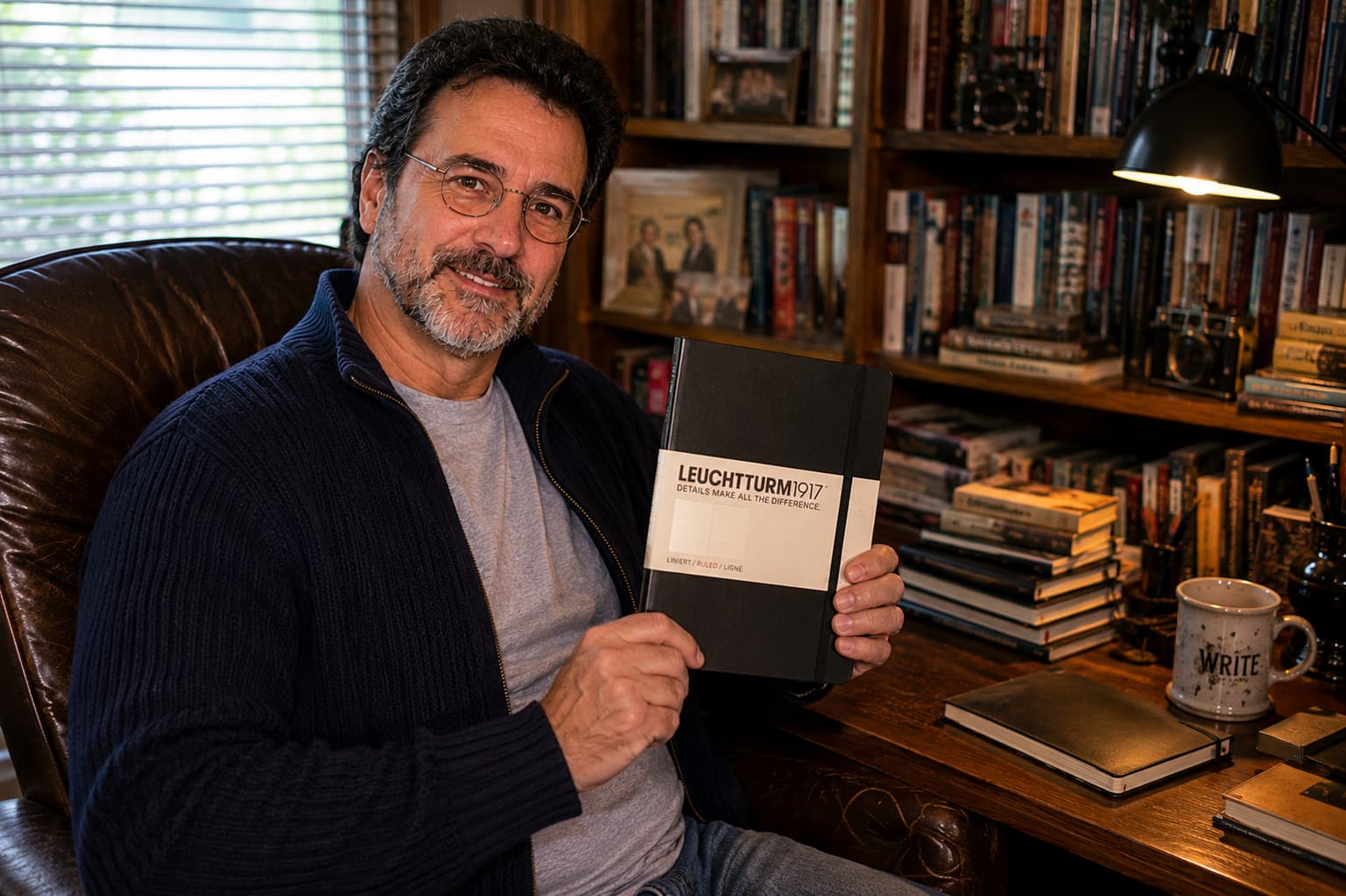
If I had to pick one notebook to use for the rest of my life, it might be the Leuchtturm1917. It is not the most exciting choice, but it is reliable. The paper is 90 gsm, which is thick enough to handle most fountain pens with minimal ghosting. The pages are numbered, which I love for indexing my notes, and there is a table of contents at the front. The dot grid option is my preferred layout, but they also offer ruled and blank. The only downside is that the paper has a slight coating that can cause some inks to feather if you use a very wet pen. I have found that a TWSBI fountain pen with a fine nib works perfectly on Leuchtturm pages. For everyday journaling and long writing sessions, this notebook is a solid choice.
Moleskine: Classic but Flawed
Moleskine is the brand that many people think of when they imagine a writer’s notebook. I used them for years, and I still have a soft spot for the look and feel. The iconic black cover, the elastic band, the pocket at the back, it all feels right. But the paper has gotten thinner over time. Most of my fountain pens bleed through, and the ghosting is heavy. For pencil or ballpoint, Moleskine works fine. The Pilot G2, for example, writes smoothly on Moleskine paper. And the hardcover version feels substantial in the hand. I would not call Moleskine one of the top writing notebooks for fountain pen users, but if you stick to fine liners or gel pens, it is still a lovely choice.
Rhodia: Paper Perfection
Rhodia notebooks use Clairefontaine paper, which is widely considered some of the best in the world. The 90 gsm paper is smooth, bright white, and handles any ink I throw at it. I have used a wet noodle of a vintage flex pen on Rhodia paper and seen no feathering and no bleed-through. The orange cover is cheerful, and the stapled or spiral binding makes them perfect for taking notes on the go. The drawback is that the binding is not as durable as a sewn notebook. If you plan to keep the notebook for years, the pages might start to separate from the cover. For daily writing, though, Rhodia is fantastic. I keep a Rhodia No. 18 dot grid pad on my desk for brainstorming and drafting.
Field Notes: Pocket-Sized and Tough
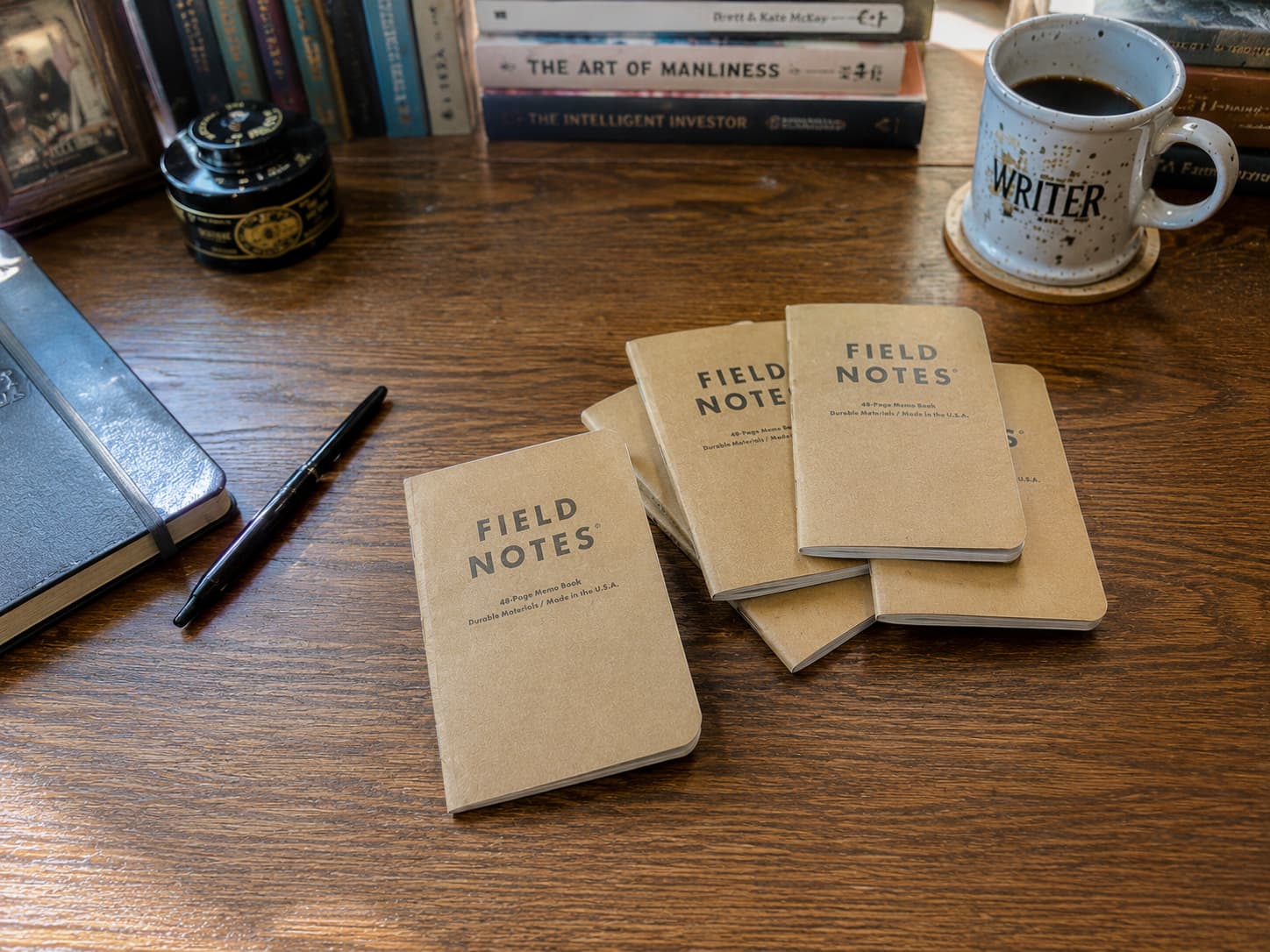
I have carried a Field Notes notebook in my back pocket for years. They are small, inexpensive, and built to be used hard. The paper is not the best for fountain pens, there is bleed-through with wet nibs, but for a Pilot G2 or a ballpoint, they are perfect. I love the variety of covers they release, and the graph paper option is great for sketching layouts or making lists. Field Notes are not the top writing notebooks for serious long-form writing, but they are essential for capturing ideas on the move. I always have one in my jacket for jotting down thoughts before they disappear.
Hobonichi Techo: The Planner-Writer Hybrid
The Hobonichi Techo uses Tomoe River paper, which is incredibly thin yet resistant to bleed-through. The paper has a soft, silky feel that makes writing a pleasure. I use the A6 size as a daily planner and also write short entries in it. The drawback is that the paper is so thin that you can see the writing on the other side. Many people call this ghosting, but with Tomoe River it is more like a faint shadow. If you can tolerate that, the Hobonichi is a joy. It lays flat, and the cover options are endless. I have paired mine with a TWSBI fountain pen filled with a shading ink, and the result is lovely. For someone who wants to combine planning and journaling, the Hobonichi is hard to beat.
Baron Fig: Minimalist and Thoughtful
Baron Fig notebooks are designed with a lot of care. The cover is soft and flexible, and the paper is 90 gsm with a smooth finish. I have tested a few of their dot grid notebooks, and they handle fountain pens well. There is some ghosting with broader nibs, but not enough to bother me. The binding is sewn and the pages lay flat. Baron Fig also offers a Confidant model that has a pocket in the back and a bookmark ribbon. It is a clean, modern notebook that does not try to be anything more than a good place to write. I recommend it for people who want a simple, elegant tool without the hype.

Notebook Therapy and Archer & Olive: For the Aesthetic
Notebook Therapy and Archer & Olive both make notebooks that are heavy on design and quality. Archer & Olive uses 160 gsm paper, which is thick enough to handle any fountain pen, even broad nibs and brush pens. The pages are a cream color, and the covers are often beautiful with gold foil or floral patterns. Notebook Therapy offers similar thick paper and a wide range of cover designs. The downside is that these notebooks are heavy. The thick paper adds weight, so they are not ideal for carrying around. But if you want a journal that feels like a treasure chest, they are wonderful. I use an Archer & Olive dot grid notebook for my morning pages, and the paper has never let me down.
Dingbats: Eco-Friendly and Well-Made
Dingbats notebooks are made from sustainable materials, and the paper is 100 gsm with a smooth finish. I have used a Dingbats wildlife series notebook, and it handled fountain pens very well. The pages are cream-colored, and the binding is sewn and lays flat. I appreciate that Dingbats includes a pocket in the back and a bookmark ribbon. They are not as widely known as some of the other brands, but they deserve a spot among the top writing notebooks for anyone who cares about the environment. The only minor issue I have is that the paper is slightly more absorbent than Rhodia, so some inks look a bit less vibrant. Still, it is a very solid choice.
Midori MD: The Purest Writing Experience
Midori MD notebooks are made in Japan and use a paper that feels uncoated and natural. The paper is cream-colored and has a texture that gives your writing a tactile feel. I love using a fountain pen on Midori MD paper because the ink spreads just enough to show shading and sheen. The binding is simple, either stapled or sewn, and the cover is a plain kraft paper or cotton. There is nothing flashy about a Midori MD, and that is exactly why it is one of my favorites. It gets out of the way and lets you write. I keep one as a travel journal, and the pages have aged beautifully with use.
Strathmore and Peter Pauper Press: For the Artistic Writer
Strathmore is known for art papers, but they also make notebooks with 100 gsm paper that works well for writing. The Strathmore Writing Notebook is a recent find of mine. It has a hard cover and a lay-flat binding, and the paper is surprisingly fountain pen friendly. Peter Pauper Press makes affordable notebooks with a vintage feel. Their paper is not as heavy as some others, but it handles fine nibs and pencil very well. I have a Peter Pauper Press journal that I use for drafting poetry, and the soft cover makes it easy to write in bed. These are not the most common recommendations, but they are worth exploring if you want something different.
Rocketbook: The Digital Hybrid
Rocketbook is a different beast. It uses reusable synthetic paper that you can wipe clean with water. You write with a Pilot Frixion pen, and the ink disappears when you heat it. The app scans your pages and sends them to the cloud. I have used a Rocketbook for meeting notes and to-do lists, and it works well for that purpose. But for serious creative writing, the feel of the paper is not the same as real paper. It is slightly slick, and the ink does not look as rich. I would not call Rocketbook one of the top writing notebooks for someone who values the tactile experience, but it is a smart tool for productivity and reducing waste.
Final Thoughts on Finding Your Notebook
After testing so many notebooks, I have learned that the best one is the one that makes you want to write. I have notebooks from almost every brand I mentioned, and I use them for different purposes. When I am at my desk working on a long piece, I reach for a Leuchtturm1917 or a Rhodia. When I am out and about, a Field Notes or a Midori MD fits in my pocket. The top writing notebooks are not the same for everyone. I encourage you to order a few from a retailer like JetPens and see which paper and binding you prefer. Try a dot grid, try a Bristol paper pad, try a Clairefontaine staplebound. Writing by hand is a pleasure that should not be compromised by poor materials. Find the notebook that feels right, and then fill it with your words.